
Weed Control Service in Fayetteville, NC
We help Cumberland County homeowners get a thicker, cleaner lawn without weeds taking over. Every treatment is picked to fit your grass and the season.
Weeds We Control in Fayetteville Lawns
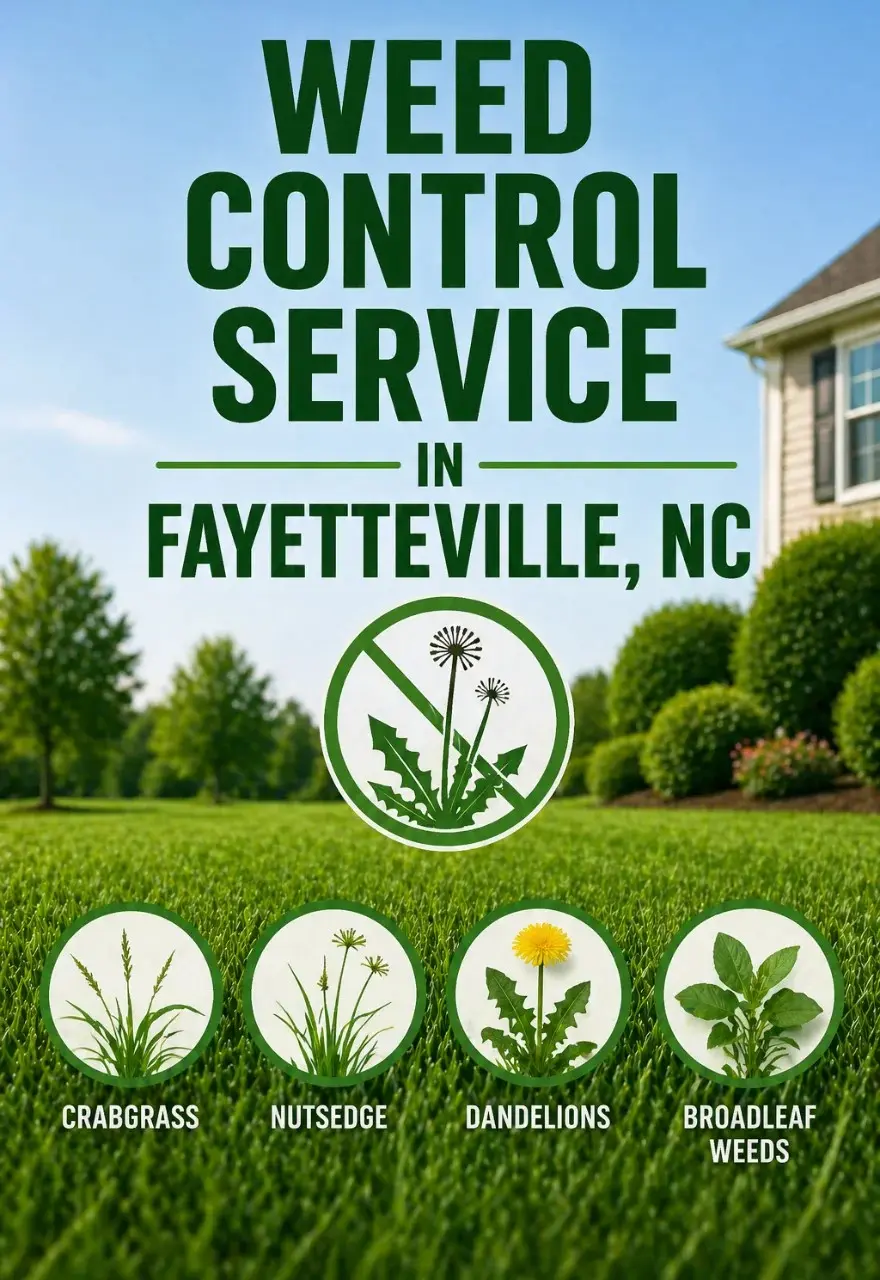
Weeds in the Sandhills come in waves. Crabgrass shows up in spring and summer, while winter weeds like henbit and chickweed take hold in fall. These are the main groups we treat.
Crabgrass and Goosegrass
Grassy summer weeds that sprout from seed as the soil warms. A pre-emergent applied before germination is the most effective way to stop them, and a post-emergent product can clean up what gets through.
Nutsedge
Often mistaken for grass, nutsedge grows faster than the turf around it, looks lighter green, and spreads through underground tubers. Standard pre-emergents do not stop it, so it needs a product made for sedges.
Dandelions and Clover
Common broadleaf weeds that move into thin or stressed lawns. Selective broadleaf products target these weeds and leave most lawn grasses alone, as long as the product matches your grass type.
Henbit, Chickweed and Winter Weeds
Winter annuals sprout in fall and show up as bright green patches in dormant warm-season lawns through winter and early spring. A fall pre-emergent helps prevent them before they start.
How Our Weed Control Process Works
Step 1
Walk the Lawn and Identify Weeds
We walk your yard, figure out what grass you have, and mark which weeds are growing and where.
Step 2
Pick the Right Treatment
Next we pick a pre-emergent, a post-emergent, or both. The choice depends on the weeds we find, the time of year, and what your grass can handle.
Step 3
Apply and Follow the Label
Products go down at the rate and timing on the label. We tell you what to do afterward about watering, mowing, and keeping kids and pets off the lawn.
Step 4
Plan the Next Treatment
Weed control is rarely a one-visit job. We tell you when the next treatment should go down, so you stay ahead of the next round of weeds.
Common Weeds in Fayetteville Lawns
These are common lawn weeds in Fayetteville and the Sandhills. If you are not sure what is growing in your yard, we can identify it when we look at the lawn.
Weed Control Pricing in Fayetteville, NC
Weed control pricing depends on lot size, the weeds present, your grass type, and whether you want one treatment or repeat visits. Weed control is priced by square footage, and we do not quote a price without seeing the lawn.
Lawns with heavy weeds, large lots, or several weed types may need more than one visit. The estimate will say so up front.
Ask about a seasonal treatment plan so each application is timed to the weeds that are coming next.
Custom Quote
after a free lawn walk-through
When Weed Control Works Best in Fayetteville, NC
Timing counts as much as the product. A weed is easy to stop before it sprouts and hard to get rid of once it has taken hold. Here is how the year usually goes for lawns around Fayetteville.
Late February to April
Spring Pre-Emergent
Crabgrass and goosegrass seed germinate as the soil warms. A pre-emergent should be down before that happens, usually as soil temperatures climb toward the mid-50s Fahrenheit.
May to August
Summer Spot Treatment
Post-emergent treatments handle weeds that break through, including nutsedge and broadleaf weeds. Summer heat and drought stress can limit what is safe to apply, so timing and product choice matter.
September to October
Fall Pre-Emergent
A fall pre-emergent helps block winter weeds like henbit, chickweed and annual bluegrass before they sprout. If you plan to overseed fescue, tell us first, because pre-emergents can stop grass seed from germinating too.
November to February
Winter Cleanup
Winter weeds show up as bright green patches in dormant warm-season lawns. Post-emergent treatment on mild days can clean them up, and winter is also the time to plan next spring’s pre-emergent.
Pre-Emergent vs Post-Emergent Weed Control
These two types of treatment do different jobs. Most lawns need both, at different times of the year.
|
Compared |
Pre-Emergent |
Post-Emergent |
|---|---|---|
|
What it does |
Stops weed seeds from establishing |
Kills weeds that are already growing |
|
Best timing |
Before seeds sprout, in spring and fall |
While weeds are actively growing |
|
Weeds it targets |
Crabgrass, goosegrass, henbit, chickweed, annual bluegrass |
Dandelion, clover, plantain, wild violet, and nutsedge with the right product |
|
Limits |
Does not kill existing weeds and can block grass seed |
Does not stop new weeds from sprouting later |
|
Typical use |
Once or twice a year as prevention |
As needed for weeds that break through |
Bermudagrass Weed Control
Dense, healthy Bermuda crowds out many weeds, and steady fertilization helps it stay that way. Thin spots left after winter dormancy are where crabgrass takes hold first.
Zoysia Grass Weed Control
Zoysia recovers slowly, so weeds that move into thin areas can stay a long time. We check the label for zoysia before applying anything.
Tall Fescue Weed Control
Tall fescue thins in summer heat, which opens space for crabgrass. Fall is the key season, and pre-emergent timing has to work around overseeding.
Centipede Grass Weed Control
Centipede is more sensitive to some herbicides than other warm-season grasses, so product choice is critical. We read the label for centipede before any application.
Lawn Habits That Let Weeds Take Over in Fayetteville
Most weed problems start with a lawn that is thin, stressed or cut the wrong way. Treatment helps, but these habits decide whether the weeds come back.
Cutting the Grass Too Short
Scalping Bermuda or cutting fescue too low thins the turf and lets sunlight hit weed seeds. Mow at the height that suits your grass and weeds have a harder time getting started.
Light Daily Watering
Frequent shallow watering keeps the soil surface damp, which favors crabgrass and nutsedge. Deeper, less frequent watering builds grass roots instead.
Treating at the Wrong Time
A pre-emergent applied after weeds sprout does little, and one applied before overseeding can stop new grass from coming in.
Leaving Bare or Thin Patches
Bare soil invites weeds. Thin areas from shade, compaction or past damage should be fixed, or weeds will keep filling them in. If pests such as grubs caused the damage, see our lawn pest control service. Core aeration can also help where the soil is packed down.
Where We Treat Lawns Around Fayetteville
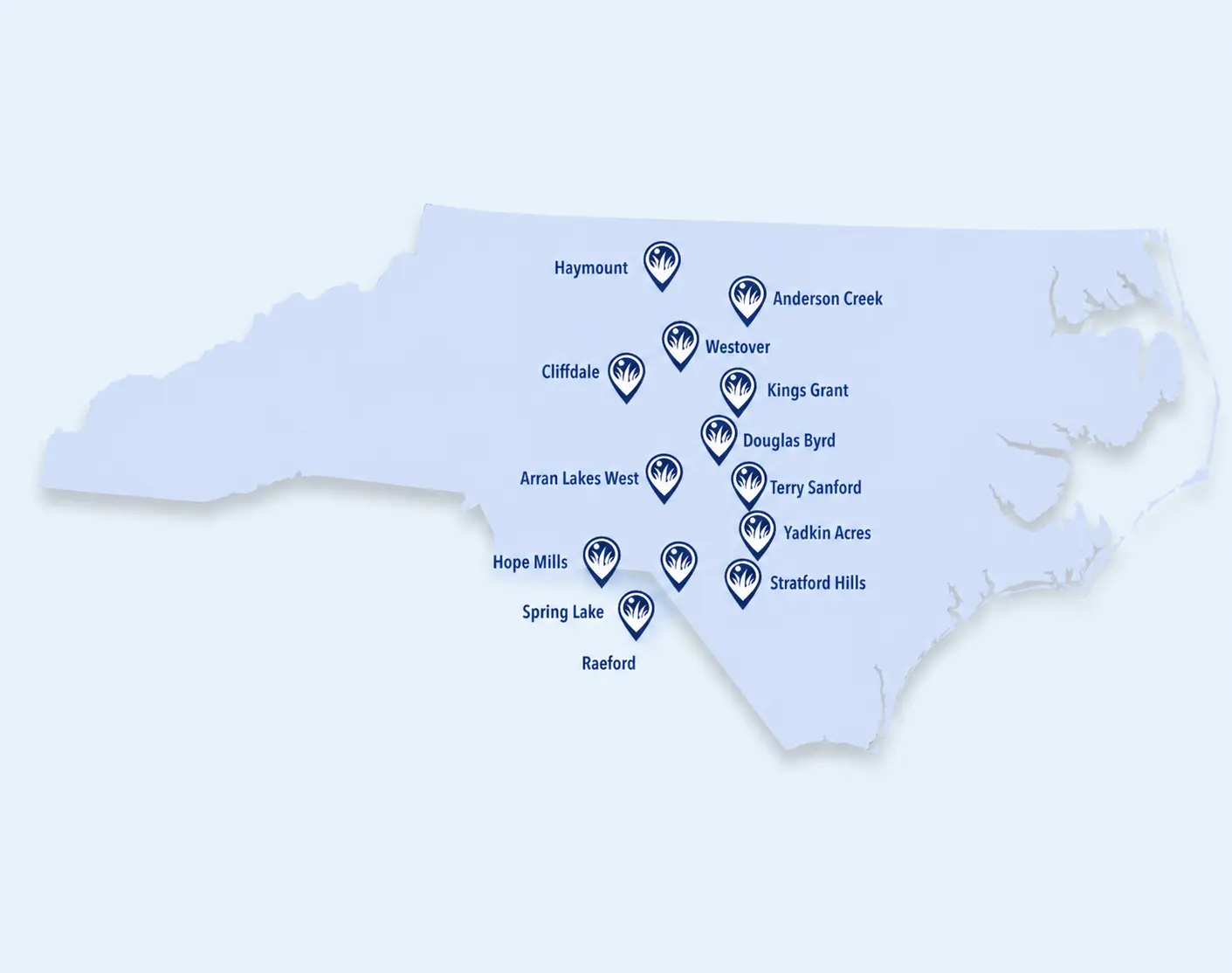
We treat lawns in Fayetteville and around Cumberland County, including the neighborhoods and nearby towns listed here.
Frequently Asked Questions – Weed Control Service Fayetteville NC
Get a Weed Control Estimate in Fayetteville, NC
Tell us what is growing in your lawn and we will stop by to look. You get a free estimate, a simple treatment plan, and the price in writing before we book any work.